Microplastics and Plastic Chemicals in Food and Water: What Ozarks Families Need to Know
By Aquasani LLC | April 14, 2026 | Water Quality | 10 min read
It is easy to think of plastic as something you throw away. The water bottle, the takeout container, the shrink wrap on the chicken breast. You toss it in the bin and it is gone.
Except it is not gone. It breaks down into smaller and smaller pieces, enters the soil, the rivers, the food supply, and eventually, your body. The science on this has moved fast over the last three years, and the picture that has emerged is worth paying attention to, whether you live in Springfield, Branson, North Western Arkansas, or anywhere across the Ozarks region.
This post covers what microplastics and plastic chemicals actually are, what the most credible recent research says about health effects, where they show up in your food and water, and what you can realistically do about it right now.
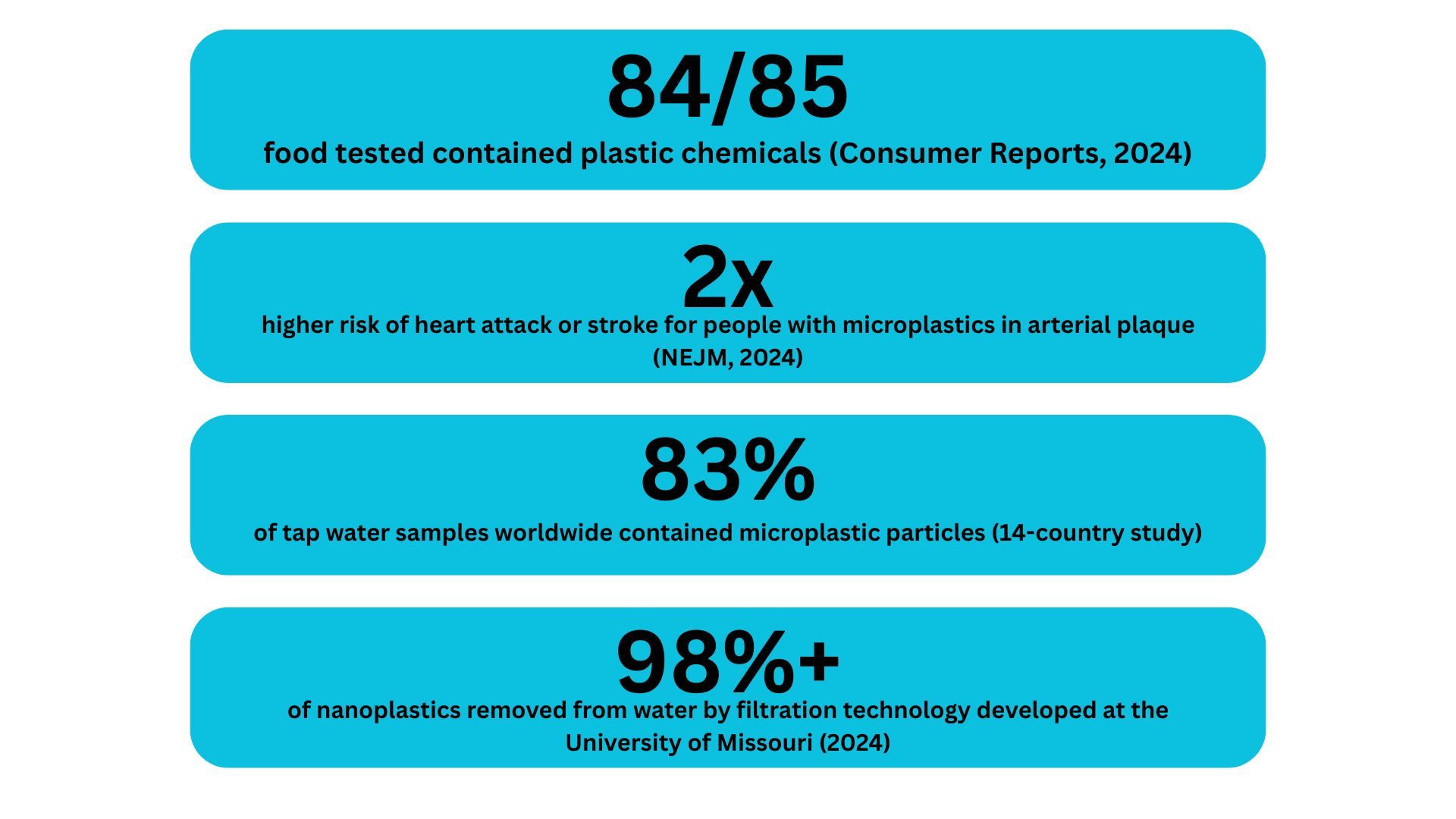
Quick answer: Microplastics are tiny plastic particles (under 5 millimeters) that have been detected in drinking water, food, human blood, lung tissue, and arterial plaque. A 2024 study in the New England Journal of Medicine found that people with microplastics in their arterial plaque had roughly twice the risk of heart attack, stroke, or death compared to those without. A separate 2024 Consumer Reports investigation found plastic chemicals called phthalates in 84 out of 85 food products tested, including popular fast food items.
What Microplastics Actually Are
Plastics do not biodegrade. They photodegrade, meaning sunlight breaks them into progressively smaller pieces. Once plastic particles fall below 5 millimeters in size, they are classified as microplastics. Below 1 micrometer, they are nanoplastics.
These particles have been found in virtually every environment studied: ocean water, river sediment, Arctic ice, agricultural soil, indoor air, bottled water, tap water, beer, honey, table salt, and fresh produce. They have been detected in human blood, lung tissue, breast milk, placenta, and most recently, inside arterial plaque.
Separate from the particles themselves is a related category of concern: plastic chemicals, primarily phthalates and bisphenols. These are additives used to make plastic flexible, clear, or durable. They leach out of plastic packaging and processing equipment into food and drink. Unlike solid microplastic particles, they are absorbed quickly into the body and are measurable in urine within hours of exposure.
What the 2024 Research Actually Found
Two studies published in 2024 significantly advanced public understanding of plastic contamination risks.
The New England Journal of Medicine Study (March 2024)
Researchers at the University of Campania Luigi Vanvitelli in Italy analyzed arterial plaque removed from patients undergoing surgery for carotid artery disease. They found microplastic and nanoplastic particles in the plaque of 58% of patients. Those patients were then tracked over three years.
The result: people with microplastics detected in their plaque were approximately twice as likely to experience a heart attack, stroke, or death from any cause during the follow-up period compared to those without detectable microplastics. This was one of the first studies to directly link microplastic exposure to measurable cardiovascular outcomes in humans.
The Consumer Reports Investigation (January 2024)
Consumer Reports tested 85 commonly purchased foods, including canned goods, packaged foods, and fast food items from major chains, for phthalates and bisphenols. The findings were striking!
The Fast Food Factor: It’s Not Just the Wrapper
While plastic wrappers are a known culprit, the 2024 Consumer Reports investigation revealed that the contamination goes much deeper into the supply chain. The study identified vinyl gloves used by staff during food preparation as a primary source of phthalate transfer, leaching chemicals directly into hot, oily foods. This explains why items like Wendy's Crispy Chicken Nuggets (approximately 34,000 nanograms per serving) and Burger King's Whopper with cheese (over 20,000 nanograms) scored so high—even though they are cooked, not just packaged. The presence of these chemicals is largely tied to the processing infrastructure and equipment used in fast-food kitchens, meaning even organic ingredients can become contaminated once they enter the system. For Ozarks families, this suggests that limiting fast food consumption and choosing fresh, whole foods is one of the most effective ways to reduce your daily plastic load. Even organic products were not exempt. The presence of plastic chemicals is largely tied to processing and packaging infrastructure, not just the food itself.
Fact check on the "98%" figure you may have seen: The widely shared stat is sometimes stated as "98% of fast food contains microplastics," but the Consumer Reports 2024 study specifically found plastic chemicals (phthalates) in 99% of the 85 foods tested across all categories, not microplastic particles exclusively. The 98% figure also appears in reference to specific phthalate levels at individual chains. Separately, researchers at the University of Missouri reported 98%+ efficiency removing nanoplastics from water using a new filtration technology in 2024. The core reality is accurate: plastic contamination of the food supply is nearly universal.
"The findings were striking: phthalates were so prevalent that only one of the 85 products we tested had none at all." — Consumer Reports, January 2024
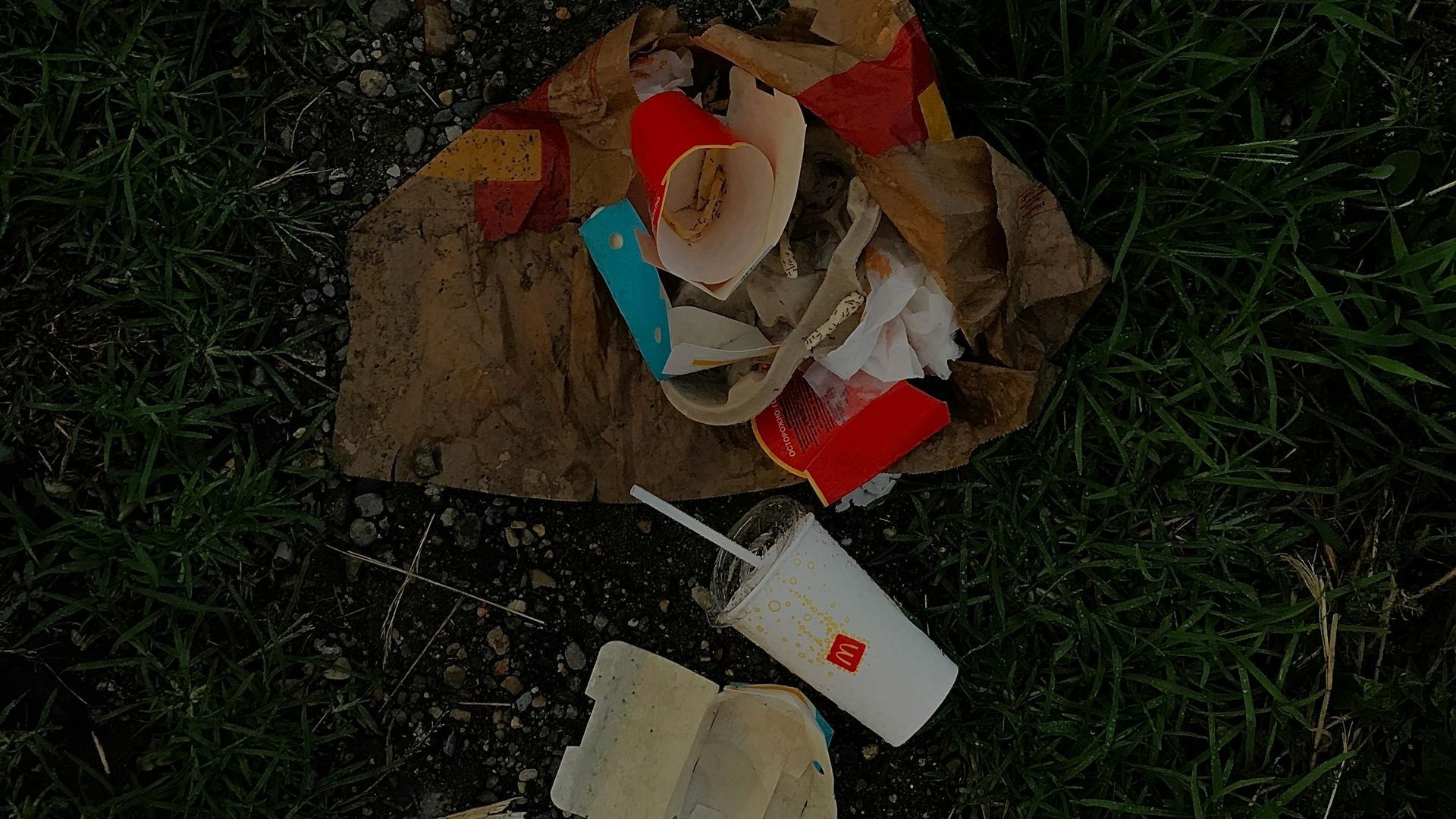
Where Microplastics Show Up in Your Water
A study that analyzed 159 tap water samples from 14 countries found that 83% contained microplastic particles, with the United States recording the highest contamination rate at 94% of samples. The primary sources in drinking water include:
- Plastic water pipes and distribution infrastructure: Aging plastic pipes shed microparticles into the water as it travels from treatment facilities to your tap
- Surface water contamination: Rivers, lakes, and reservoirs pick up microplastics from stormwater runoff, agricultural land treated with sewage sludge, and airborne plastic particles that settle on open water
- Water treatment limitations: Standard municipal water treatment is not designed to remove microplastic particles. Coagulation and filtration processes catch larger particles but nanoplastics pass through
- Plastic storage containers and bottles: Perhaps counterintuitively, bottled water contains significantly more microplastics than most tap water. Consuming bottled water is estimated to expose a person to approximately 90,000 additional microplastic particles per year versus 4,000 from tap water
For communities across the Ozarks, where surface water from the region's lakes and rivers feeds many municipal systems, and where a large number of households rely on private wells, the pathways for microplastic entry into drinking water are very real. The Ozarks' limestone karst geology, which means water moves through fractures and sinkholes rather than filtering through dense soil, creates additional vulnerability for groundwater contamination.
Missouri Researchers Are Working on Solutions
This is a meaningful local angle that deserves attention. In 2024, researchers at the University of Missouri developed a new filtration method achieving over 98% efficiency in removing nanoplastics from water, one of the highest removal rates documented for these extremely small particles. A separate team at Mizzou's College of Engineering designed a filter specifically for removing microplastics and lead from household tap water.
This research matters for Ozarks residents in two ways. First, it demonstrates that filtration at the point of use is feasible and highly effective even for nanoscale particles. Second, it reflects the level of institutional attention Missouri's scientific community is directing toward plastic contamination of the water supply. This is not a coastal concern or a distant problem. It is being studied right here in the state.
What You Can Do About It
Eliminating plastic chemicals entirely from your diet is not realistic. But reducing your exposure, particularly from drinking water, is both practical and well-supported by the evidence.
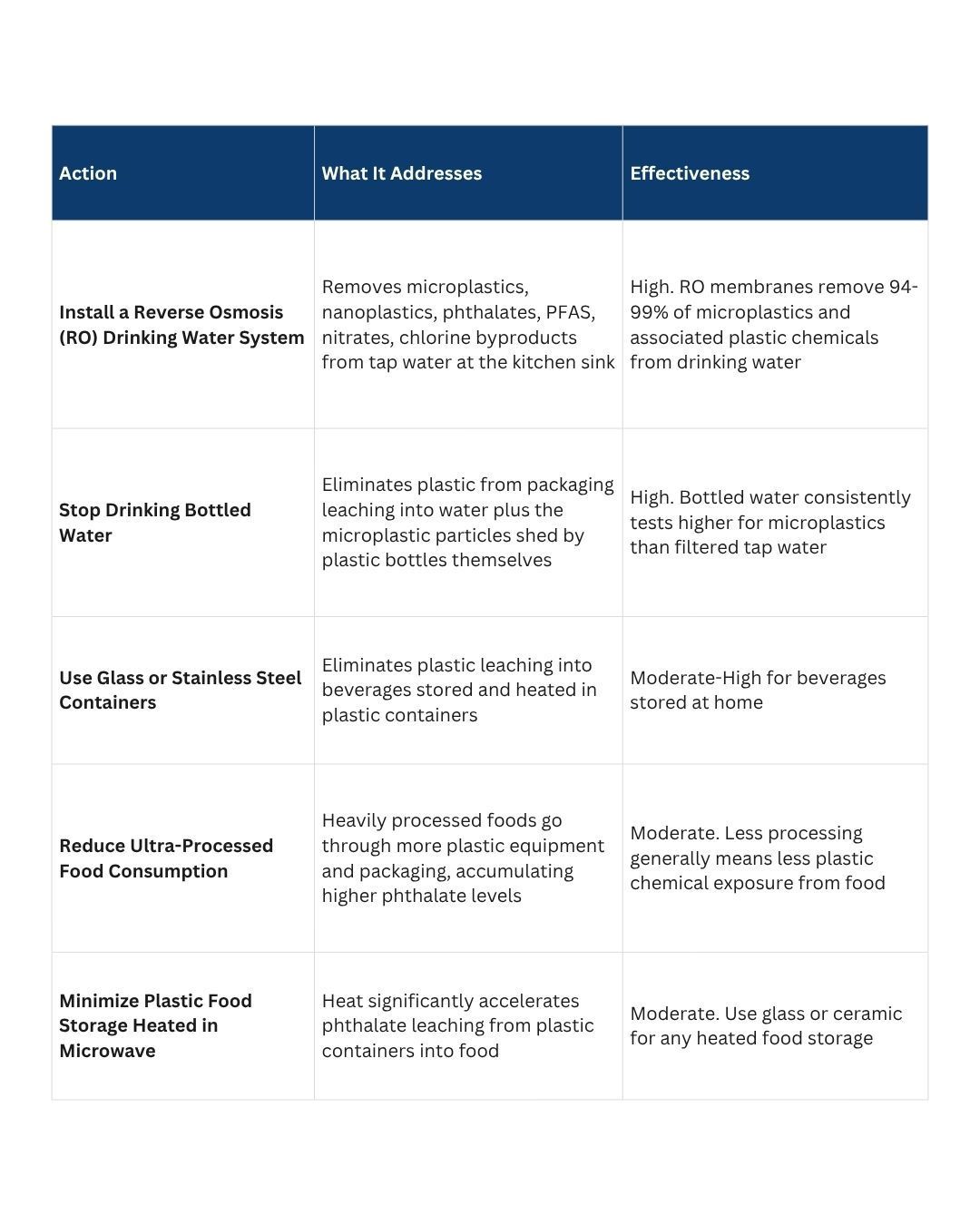
The bottled water math: The average American drinking the recommended 8 glasses of water daily from plastic bottles consumes an estimated 90,000 additional microplastic particles per year beyond what they would get from filtered tap water. A quality reverse osmosis system produces clean, great-tasting water at roughly 1 to 3 cents per gallon, compared to $1 or more per bottle. Over a year for a family of four, the savings cover the cost of the system.
What the WHO and EPA Say
The World Health Organization has stated that current evidence is insufficient to conclude that microplastics in drinking water at observed levels pose a major health risk. The organization simultaneously acknowledges that the science is evolving rapidly and called for more research. The EPA does not currently regulate microplastic particles in drinking water, though the agency has committed to studying the issue under the Safe Drinking Water Act research framework.
The absence of a regulatory standard does not mean the absence of a concern. As with PFAS, the regulatory process lags behind the science. The most credible research being published in peer-reviewed journals, including the New England Journal of Medicine, is pointing in a consistent direction: plastic contamination of the body is measurable, it is widespread, and the health correlations are significant enough to warrant attention now rather than waiting for regulatory action.
Want to Know What's in Your Ozarks Tap Water?
Wondering what's really in your water? Aquasani provides expert guidance and analysis for homeowners across the Ozarks (Springfield, Branson, Nixa, Ozark, Republic, Willard, Mountain Home, and beyond). Understand your water quality numbers and find the right solution for your home.
Frequently Asked Questions About Microplastics
What are microplastics?
Microplastics are defined as plastic fragments measuring less than 5 millimeters, created when larger plastic items degrade in the environment. These particles have permeated global ecosystems, appearing in soil, air, and water sources. They have also been identified within human tissues, including blood and arterial plaque. A related category, nanoplastics, measures under 1 micrometer and is small enough to cross cellular barriers.
Are microplastics really in fast food?
Yes. A January 2024 Consumer Reports investigation tested 85 food products and found plastic chemicals called phthalates in 84 of them (99%). Fast food items including Wendy's chicken nuggets and Burger King's Whopper tested among the highest. The primary contamination pathway for fast food is food contact with vinyl gloves and plastic processing equipment during preparation. Plastic chemicals also leach from packaging into food, particularly when heat is involved.
Is microplastics in drinking water dangerous?
Science is developing. A landmark March 2024 study in the New England Journal of Medicine found that people with microplastics detected in their arterial plaque were approximately twice as likely to have a heart attack, stroke, or die from any cause over a three-year period compared to those without detectable microplastics. The WHO has stated that existing evidence does not yet support concluding that current levels pose a major health risk, while simultaneously calling for more research. Most experts recommend reducing exposure where practical, particularly from drinking water.
Does reverse osmosis remove microplastics from drinking water?
Yes. Reverse osmosis is among the most effective household treatment methods for removing both microplastics and plastic chemicals from drinking water. RO membranes physically block particles and many dissolved plastic chemicals, with removal rates typically in the 94-99% range. Research published in 2024 from the University of Missouri demonstrated over 98% efficiency removing nanoplastics using advanced filtration technology, consistent with what quality RO systems achieve at the household level.
Does bottled water have microplastics?
Yes, and typically more than tap water. Studies estimate that bottled water consumption exposes a person to approximately 90,000 additional microplastic particles annually compared to tap water. The plastic bottle itself is a source, as are the plastic processing and bottling lines. For Ozarks households looking to reduce plastic exposure in their water, a point-of-use reverse osmosis system at the kitchen tap is a more effective and far less expensive long-term solution than purchasing bottled water.
What is the best way to reduce microplastics exposure in the Ozarks?
The most practical high-impact steps are: install a reverse osmosis drinking water system at your kitchen tap, stop drinking water from plastic bottles, and store beverages in glass or stainless steel. For Ozarks communities served by surface water systems (which draws from rivers, lakes, and reservoirs), a quality home filtration system at the point of use is particularly relevant because surface water is more susceptible to microplastic contamination than protected groundwater sources.
The Bottom Line
Plastic has been part of daily life for 80 years. The chemicals and particles that plastic sheds have been accumulating in the environment and in human bodies the entire time. We are only now beginning to measure the health consequences at a scale that produces statistically meaningful findings.
The research published in 2024 marks a shift. We moved from "microplastics are detectable in the body" to "microplastics in the body are associated with significantly worse cardiovascular outcomes." That shift in the science warrants practical action, not panic.
The good news is that the most effective intervention, a quality reverse osmosis system for drinking water, is available, proven, and affordable. It does not just address microplastics. It addresses PFAS, disinfection byproducts, nitrates, chlorine, and dissolved solids at the same time. One solution, multiple problems solved.
If you are in Springfield, Branson, Nixa, Ozark, Republic, North Western Arkansas, or anywhere across the Ozarks and want to know what is actually in your water, Aquasani is here to help. No pressure, just information.
Sources and References:
- Marfella R, et al. —
Microplastics and Nanoplastics in Atheromas and Cardiovascular Events. New England Journal of Medicine, March 7, 2024.
nejm.org
- Consumer Reports —
The Plastic Chemicals Hiding in Your Food. Published January 4, 2024, updated February 2024.
consumerreports.org
- CBS Boston — Many fast foods contain tiny plastics, according to Consumer Reports study. cbsnews.com
- University of Missouri —
Mizzou scientists achieve more than 98% efficiency removing nanoplastics from water. August 2024.
showme.missouri.edu
- University of Missouri College of Engineering —
Researchers design a filter to remove microplastics and lead from tap water.
kcur.org
- World Health Organization — Microplastics in Drinking Water. WHO Publications. who.int
- Stanford Medicine — Microplastics and our health: What the science says. January 2025. med.stanford.edu
- World Economic Forum — How microplastics get into the food chain. February 2025. weforum.org
- ScienceDirect / Environmental Research — Microplastics in take-out food: Are we over taking it? 2022. sciencedirect.com