Water Softening Guide in 2026
Water Softener Systems: The Ultimate Guide to Cleaner Water, Better Homes, and Longer-Lasting Appliances (2026)
Introduction to Water Softener Systems
If your dishes come out spotty, your shower leaves your skin feeling dry, or your appliances seem to wear out faster than expected, your water might be the culprit. A water softener system is designed to remove minerals that cause these everyday frustrations, helping your home run more efficiently while improving comfort at the same time.
Hard water is incredibly common across the United States and many parts of the world. According to the U.S. Geological Survey (USGS), over 85% of U.S. homes have hard water to some degree. While it’s not dangerous to your health, it can quietly damage plumbing, reduce appliance efficiency, and increase energy costs over time.
That’s where a water softener comes in—it works behind the scenes to transform your water into something that’s easier on your home, your skin, and your wallet.
What Is Hard Water and Why Does It Matter?
At its core, hard water simply means your water contains high levels of dissolved minerals—primarily calcium and magnesium. These minerals are picked up as groundwater moves through rock and soil before entering your home’s water supply.
While these minerals are naturally occurring, they create a range of problems once they start interacting with your plumbing and appliances.
Key Characteristics of Hard Water
- Leaves white, chalky residue (limescale)
- Reduces soap effectiveness
- Causes buildup in pipes and appliances
- Can make hair and skin feel dry
- Hard Water Measurement Levels
Water Type Hardness (mg/L)
- Soft Water 0–60
- Moderately Hard 61–120
- Hard Water 121–180
- Very Hard 180+
These ranges align with general water quality standards referenced by organizations like the USGS and EPA.
Common Problems Caused by Hard Water
Hard water doesn’t just show up in obvious ways—it builds up slowly, often going unnoticed until damage is already done.
- Limescale buildup forms inside pipes and appliances, restricting water flow
- Soap becomes less effective, leaving behind residue instead of rinsing clean
- Water heaters lose efficiency, requiring more energy to heat water
- Clothing wears out faster, feeling stiff and looking dull
- Skin and hair feel dry, due to mineral residue left behind
The U.S. Department of Energy notes that even a small amount of scale buildup can reduce heating efficiency significantly, increasing energy use and utility bills.
What Is a Water Softener System?
A water softener system is a filtration device that removes hardness-causing minerals using a process called ion exchange. It improves water quality throughout your home, making it safer and more efficient for everyday use.
How Does a Water Softener Work? (Simple Explanation)
A water softener might sound complex, but the process is actually quite straightforward once you break it down.
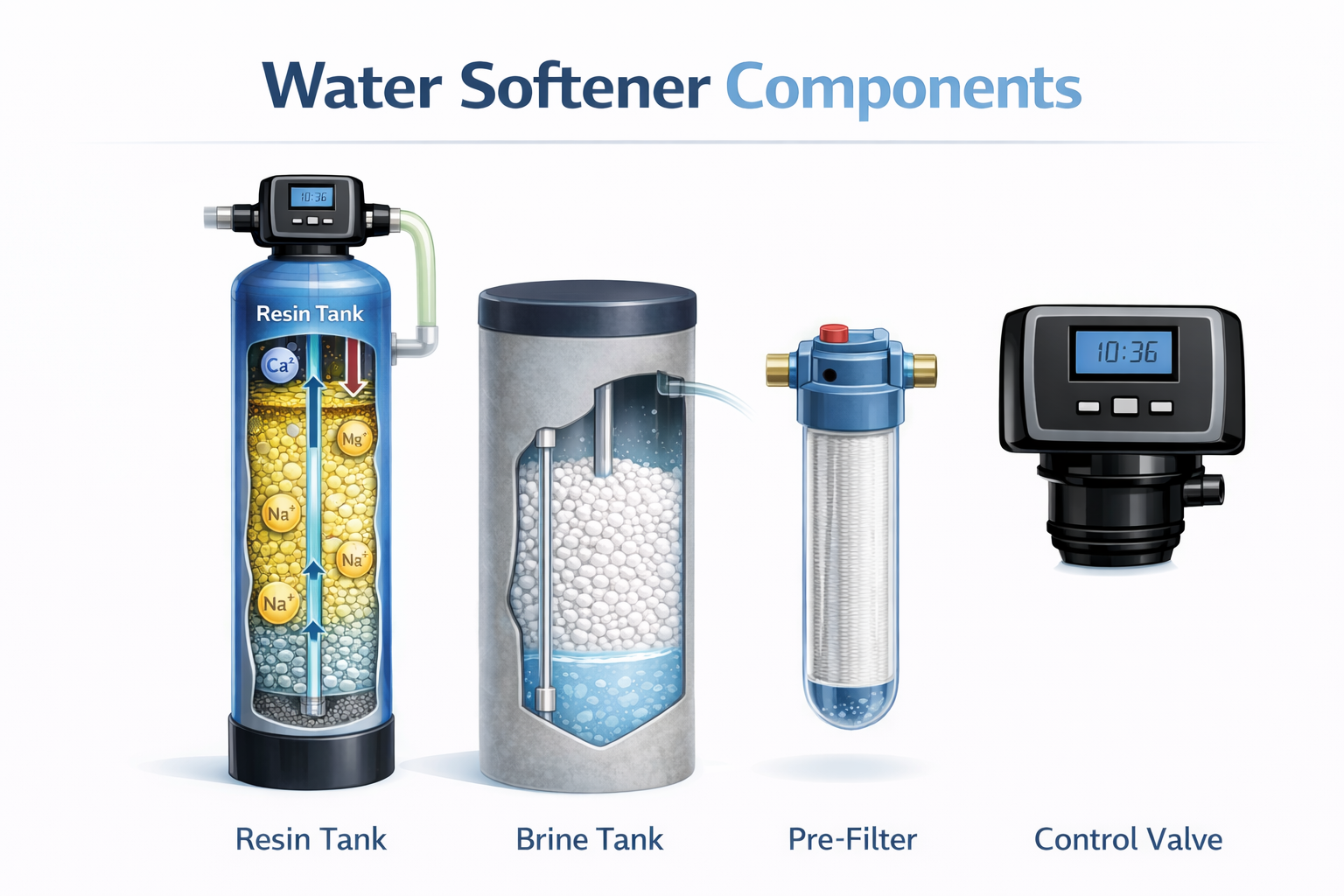
As water enters your home, it first passes through a tank filled with tiny resin beads. These beads are specially designed to attract and hold onto hard minerals like calcium and magnesium.
Instead of those minerals continuing through your plumbing system, they stick to the resin. In exchange, the system releases small amounts of sodium or potassium into the water—effectively “softening” it.
After a certain amount of use, the system cleans itself through a process called regeneration, flushing the trapped minerals away and resetting the resin so it can continue working efficiently.
It’s a continuous cycle that keeps your water quality consistent without requiring constant attention.
Main Components of a Water Softener System
To really understand how everything works together, it helps to look at the key components—not as separate parts, but as a system that operates in sync.
Resin Tank: Where the Softening Happens
The resin tank is the heart of the system. Inside, millions of tiny resin beads carry a negative charge that attracts positively charged minerals like calcium and magnesium.
As hard water flows through this tank:
- Minerals are captured and held by the resin
- Sodium ions are released into the water
- Softened water exits and travels throughout your home
At the bottom of the tank, a layer of gravel helps distribute water evenly and supports the resin bed, ensuring consistent performance.
Brine Tank: The Regeneration Engine
Next to the resin tank sits the brine tank, which plays a crucial supporting role.
This tank holds salt and water, creating a concentrated salt solution called brine. During regeneration:
- The brine is pulled into the resin tank
- It flushes away the trapped minerals
- The resin beads are “recharged” and ready to work again
Without this step, the system would quickly become saturated and stop softening water effectively.
Control Valve: The System’s Brain
Sitting on top of the resin tank, the control valve manages everything.
It determines:
- When water flows through the system
- When regeneration cycles occur
- How much water is used during cleaning
Modern systems often use smart technology to monitor water usage and optimize regeneration, making them more efficient than ever.
Pre-Filter (Optional but Recommended)
While not always included, a pre-filter is a valuable addition.
It removes:
- Sand
- Sediment
- Rust particles
By filtering out larger debris before water reaches the softener, it helps extend the life of the system and maintain performance.
How Everything Works Together (The Full Cycle)
Rather than thinking of each component separately, it’s easier to understand the system as a continuous loop:
- Hard water enters the system
- Minerals are removed in the resin tank
- Soft water flows into your home
- The system tracks usage automatically
- Regeneration occurs when needed
- Waste minerals are flushed to the drain
This seamless cycle is what makes water softeners so effective—they operate quietly in the background, requiring minimal input from the homeowner.
Benefits of Installing a Water Softener System
Once installed, the benefits of a water softener are noticeable almost immediately—and they extend far beyond just cleaner dishes.
Improved Appliance Efficiency
Soft water prevents mineral buildup, allowing appliances to run at peak efficiency and last longer.
Lower Energy Costs
Without scale buildup, water heaters operate more efficiently, reducing energy consumption.
Better Cleaning Performance
Soap and detergents work more effectively, meaning:
- Less soap is needed
- Dishes come out cleaner
- Laundry feels softer and looks brighter
- Healthier Skin and Hair
Soft water rinses clean, leaving skin feeling smoother and hair more manageable.
Reduced Maintenance Costs
Fewer plumbing issues and appliance repairs can save hundreds—or even thousands—over time.
Maintenance: Keeping Your System Running Smoothly
One of the biggest advantages of water softeners is how easy they are to maintain.
Simple Ongoing Care
- Check salt levels monthly
- Refill as needed
- Keep the brine tank clean
- Occasional Maintenance
- Inspect for salt bridging (hard crust buildup)
- Clean the tank periodically
- Schedule professional servicing every few years
Most systems last between 15–20 years, making them a long-term investment in your home.
Is a Water Softener Worth It?
For many homeowners, the answer is a clear yes.
When you factor in:
- Reduced energy bills
- Longer appliance lifespan
- Less frequent plumbing repairs
- Improved comfort and cleaning
A water softener often pays for itself over time.
If you live in an area with moderate to hard water, installing a system isn’t just a convenience—it’s a smart upgrade that protects your home and improves daily life.
Frequently Asked Questions
1. Does a water softener remove contaminants?
No, it primarily removes hardness minerals. Additional filtration is needed for chemicals or bacteria.
2. Is softened water safe to drink?
Yes, though it contains small amounts of sodium. Most people can safely drink it.
3. How often does regeneration happen?
Typically every 3–7 days, depending on water usage.
4. Can hard water damage appliances?
Yes, mineral buildup can reduce efficiency and shorten lifespan.
5. Do I need a professional installation?
It’s recommended for best performance, though DIY is possible.
6. How do I know if I have hard water?
Look for residue, poor soap performance, or test your water with a kit.
Conclusion: A Small Change with Big Impact
A water softener system might not be the most visible upgrade in your home, but it’s one of the most impactful. By removing the minerals that cause damage and inefficiency, it helps everything—from your plumbing to your skin—perform better.
If you’ve been dealing with the effects of hard water, this is one solution that delivers real, lasting results.
Sources
- U.S. Geological Survey (USGS) – Water Hardness Data
- U.S. Department of Energy – Water Heating Efficiency
- Environmental Protection Agency (EPA) – Drinking Water Information
- https://www.energy.gov/energysaver/water-heating