What That Smell in Your Water Really Means
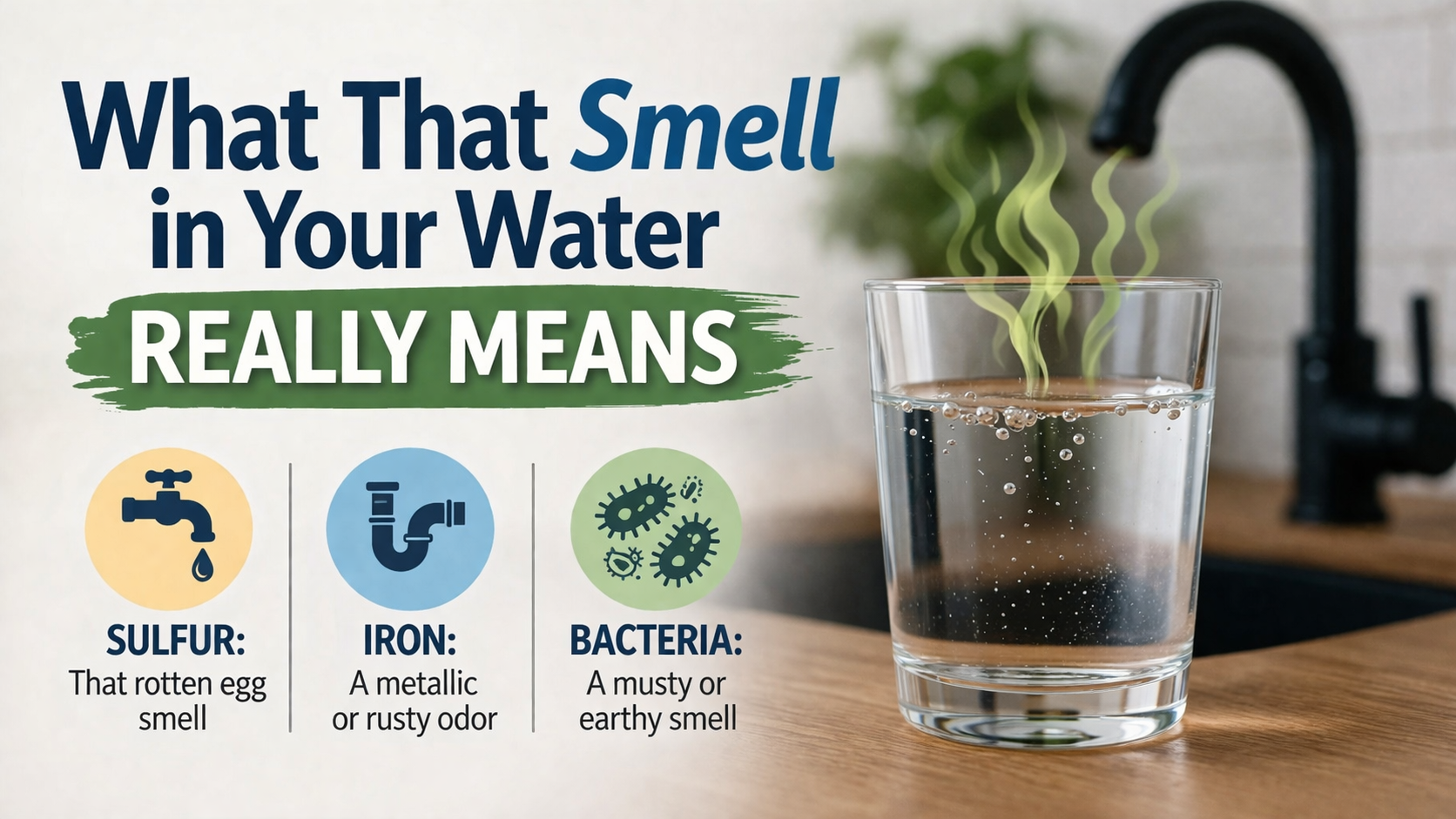
The Rotten Egg Mystery: What That Smell in Your Water Really Means
That unmistakable rotten egg stench coming from your kitchen faucet. It's enough to make you hold your nose and wonder if your water is actually safe to drink. You're not alone. Springfield homeowners deal with this issue regularly, and the good news is it's not a mystery. It has a name. It has causes. And most importantly, it has solutions.
What Is That Rotten Egg Smell?
That pungent odor is hydrogen sulfide (H 2 S), a naturally occurring gas. According to Penn State Extension, hydrogen sulfide is the culprit behind the classic “rotten egg” smell in water. At even 1–2 ppm (parts per million), it's potent enough to make your water utterly unpleasant.
Here's the strange part: the EPA doesn't regulate hydrogen sulfide as a primary drinking water contaminant. That doesn't mean it's safe to ignore. It means your water is unpleasant and potentially problematic in other ways.
Why Is Your Water Smelling Like Sulfur?
The Ozarks region has natural geology that favors hydrogen sulfide. The area sits on shale, sandstone, and other mineral deposits that naturally contain sulfur compounds. That sulfur has been there for millions of years.
Wellowner.org explains that sulfur-reducing bacteria thrive in the low-oxygen environments of groundwater. These harmless bacteria (they won't hurt you) feed on sulfur compounds and release hydrogen sulfide gas as a byproduct. It's their metabolism at work.
For city water in Springfield, the problem usually starts in your water heater. The magnesium anode rod inside your water heater can react with sulfate-reducing bacteria, creating the smell. Turn on your hot water and smell that rotten egg stench? That's your clue.
For well water users in Nixa, Ozark, Branson, Willard, and surrounding areas, the source is often natural. The sulfur compounds are coming from the aquifer itself.
Is It Actually Dangerous?
Here's the reassuring part: at the levels found in most Springfield homes, hydrogen sulfide doesn't cause immediate illness. University of Nebraska Extension notes that hydrogen sulfide doesn't usually pose immediate health problems at typical domestic levels.
But chronic exposure to high levels can cause problems. The Minnesota Department of Health reports that ongoing exposure to elevated hydrogen sulfide can lead to headaches, nausea, and irritation of the eyes and throat.
More importantly, the presence of hydrogen sulfide is a red flag. TapWaterData explains that the smell itself indicates your water quality is compromised and needs attention. It also makes your water corrosive to plumbing and appliances, which can lead to other contaminants leaching into your system.
Treatment Solutions That Actually Work
The good news is hydrogen sulfide is one of the most treatable water quality issues. You have real options.
Aeration. Aeration introduces oxygen into the water, which oxidizes hydrogen sulfide into harmless sulfur particles that can be filtered out. This method works for about 50–70 % of hydrogen sulfide cases.
Chemical Oxidation. More aggressive than aeration, chemical oxidation uses hydrogen peroxide or chlorine injection ahead of a filter. Penn State Extension reports this approach achieves 95–99 % removal. It's more expensive but highly effective.
Manganese Greensand Filtration. This specialized filter media works like a magnet for hydrogen sulfide. The system converts dissolved hydrogen sulfide gas into tiny sulfur particles that the media traps. The filter needs periodic regeneration with potassium permanganate. It handles levels up to about 6 ppm.
RainSoft Solutions for Springfield Homeowners. RainSoft offers whole-house filtration systems designed specifically to eliminate sulfur odors. Their EC4 OxyTech system works through a three-step process. First, the system oxygenates the water to convert dissolved hydrogen sulfide into physical particles. Then a multimedia filter bed traps those particles. Finally, the system backwashes automatically to clean itself. RainSoft's systems handle hydrogen sulfide levels up to 10 ppm.
The Right Solution for Your Home
Choosing a treatment depends on your water's hydrogen sulfide concentration and whether you're on well or city water. A water test tells you exactly what you're dealing with.
For well water users, a whole-house filtration system is usually the best choice. You need comprehensive treatment at the source. For city water users whose issue is confined to the hot water heater, sometimes replacing the anode rod or installing a point-of-use filter on hot water lines is enough.
The real answer is that guessing doesn't work. Professional water testing reveals the hydrogen sulfide level, identifies any other issues (iron, manganese, bacteria, sediment), and points to the most cost‑effective solution for your situation.
Frequently Asked Questions
Is rotten egg smell in water dangerous?
Hydrogen sulfide at typical household levels isn't an immediate health hazard, but chronic exposure can cause headaches, nausea, and throat irritation. The smell also indicates water quality issues and corrosive conditions that damage plumbing.
Why does my hot water smell worse than cold water?
If only your hot water smells like rotten eggs, your water heater's magnesium anode rod is likely the source. The rod reacts with sulfate-reducing bacteria. This is actually good news. It usually means your cold water is fine and you only need to address the heater.
Can I just run my water longer to get rid of the smell?
No. The smell doesn't go away with flushing. Hydrogen sulfide is dissolved in the water. You need treatment to remove it.
How much does it cost to fix hydrogen sulfide in water?
It depends on the treatment method. Replacing a water heater anode rod costs $100-300. A whole-house filtration system like RainSoft's EC4 OxyTech typically ranges from $1,500-3,500 installed, depending on your water and home setup. A professional water test costs $100-200 and is well worth it to avoid wasting money on the wrong solution.
Does a water softener remove hydrogen sulfide?
A standard water softener doesn't remove hydrogen sulfide. You need specialized filtration. However, many people use a combination of systems. RainSoft dealers in the Springfield area can design a complete solution if you need both softening and sulfur removal.
How often does the treatment system need maintenance?
It depends on the system. Manganese greensand filters need periodic regeneration with potassium permanganate. RainSoft systems have automated backwash functions. Some systems need maintenance every 6-12 months. Your installer will provide a maintenance schedule.
That rotten egg smell doesn't have to be your reality. Aquasani offers a free water test with no obligation. We'll identify the hydrogen sulfide level and any other issues, then show you exactly which treatment will work for your home.
Call 417‑881‑4000 or visit aquasani.net today.