The Water Bottle Trap
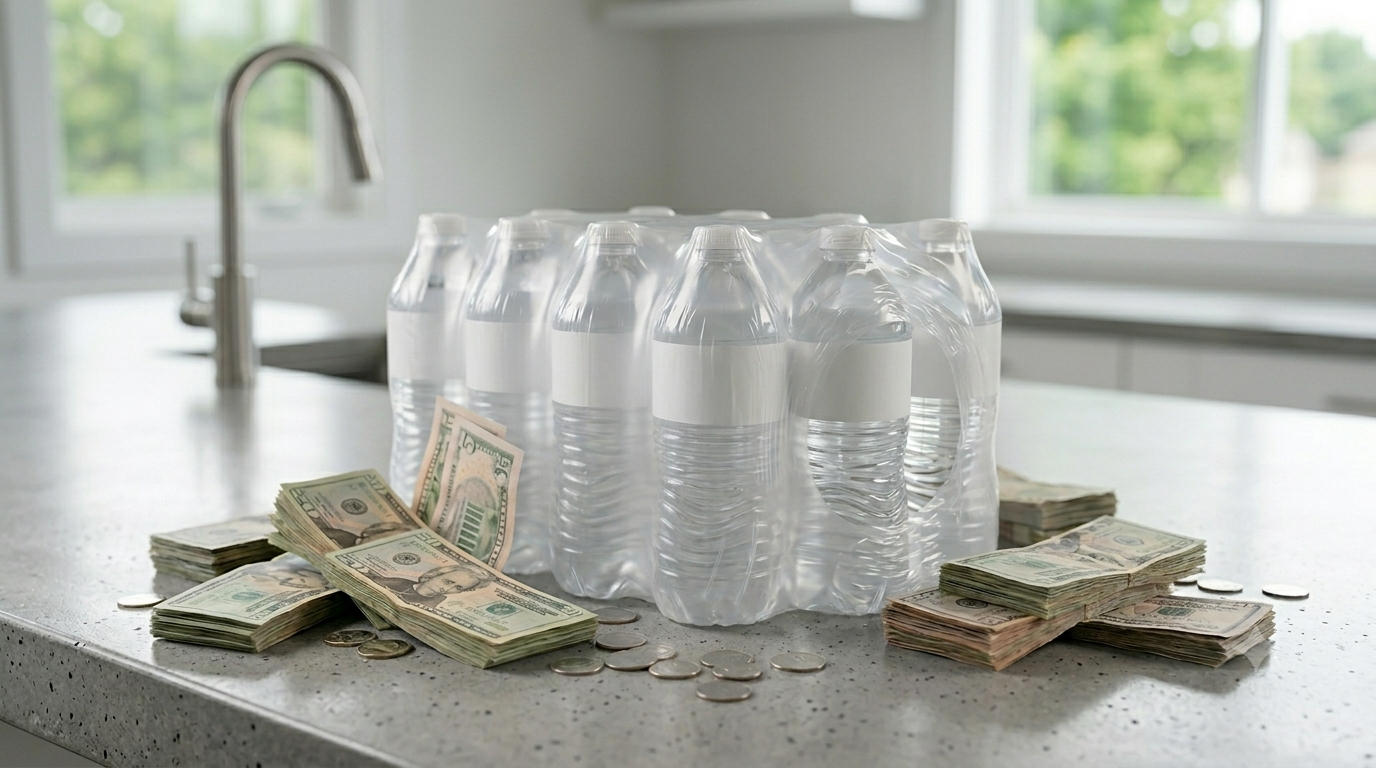
If you're buying cases of bottled water every week for your family in Springfield, Nixa, or Ozark, you're spending real money on something you may not need. The average Missouri household drops over $1,350 a year on bottled water. And here's the part that surprises most people: that water inside the bottle may actually contain more contaminants than what comes out of your tap — once it's properly filtered.
The Real Cost of That Case at the Gas Station
Grab a case of water at Price Cutter or the Walmart on Campbell — easy enough. But those trips add up faster than most families realize.
According to a widely cited analysis, the average American family spends about $1,350 per year on bottled water. Families who favor premium brands like Smartwater or Dasani push that number higher — sometimes past $2,000 per person annually. Meanwhile, filtered tap water costs a fraction of a penny per gallon.
A whole-home RainSoft water treatment system typically runs between $1,500 and $5,000 as a one-time investment. For many Springfield families, that's a single year of bottled water costs — or less. After that, it's clean, filtered water from every tap in the house, indefinitely.
What's Actually Inside That Bottle
Most people assume bottled water is purer than tap water. That assumption has taken a hit over the last few years.
The Natural Resources Defense Council found that roughly 25% of bottled water is simply treated municipal tap water poured into a plastic bottle — including well-known brands. The source looks cleaner on the label than it is in reality.
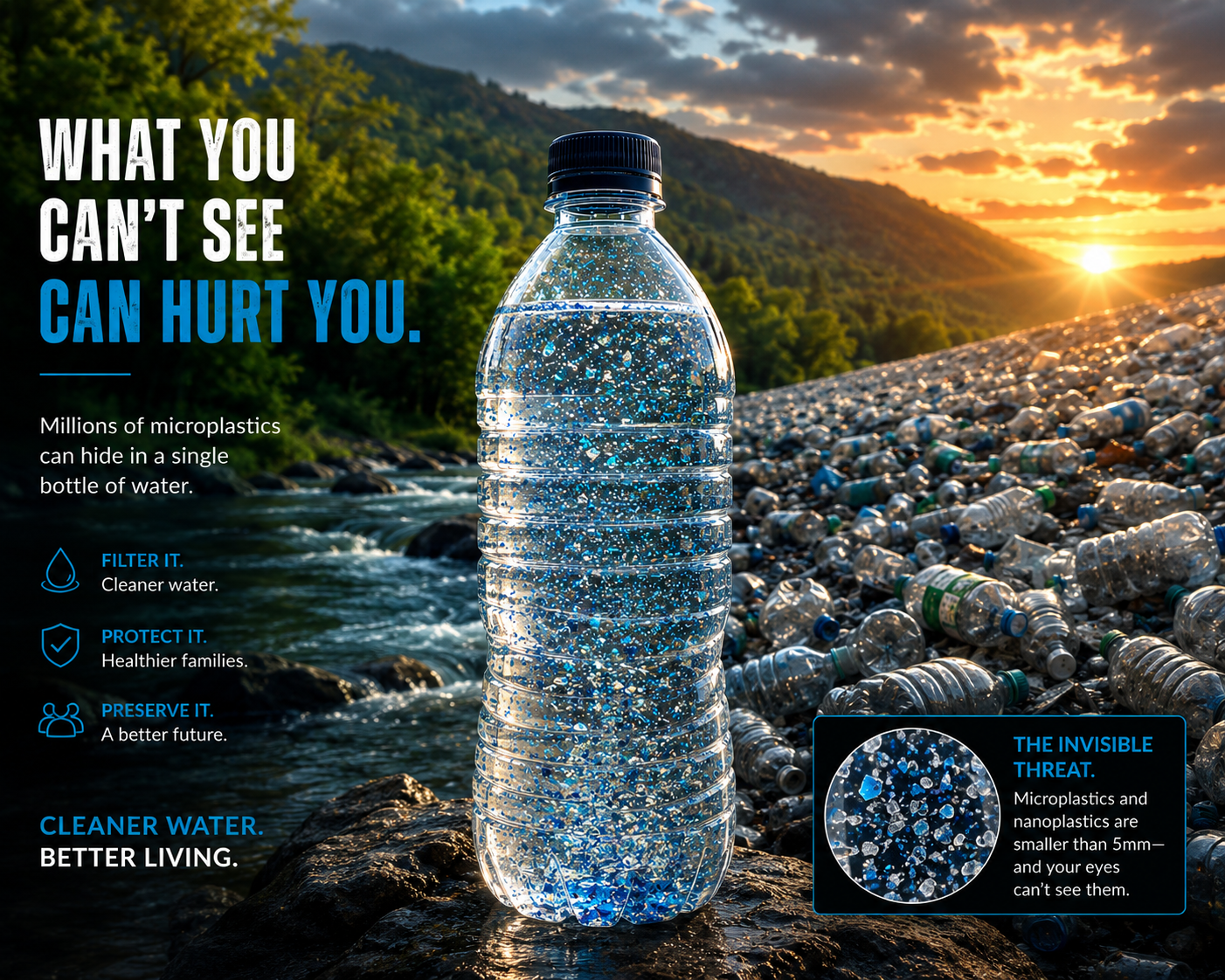
More concerning is what ends up in the water from the plastic itself. A 2024 study found approximately 240,000 plastic fragments per liter of bottled water, with about 90% classified as nanoplastics. Research published in early 2026 confirmed that bottled water contains higher concentrations of microplastics than tap water overall.
Plastic bottles break down when exposed to heat or UV light — think about a case sitting in a hot car, or a pallet baking in a warehouse before it ever reaches the store shelf.
The EPA Finally Said Something
In April 2026, the EPA and HHS announced historic actions to address microplastics in drinking water. For the first time, the EPA added microplastics to its Contaminant Candidate List — a formal step toward potential regulation under the Safe Drinking Water Act.
The government also launched a $144 million initiative called STOMP to develop tools to detect and remove microplastics from water supplies. Regulations are still years away from being finalized. But the science that's driving those conversations is available right now.
The irony: the bottled water you're buying as an alternative to tap water may be delivering more microplastics directly to your family, not fewer.
The Plastic Problem Goes Beyond Your Kitchen
Americans used about 86 billion plastic water bottles in a recent year. Only about one in three of those bottles gets recycled. The rest ends up in landfills, along roadsides, or eventually in waterways.
Producing bottled water takes up to 2,000 times more energy than delivering the same amount through your tap. For every liter of water in the bottle, three liters of water were used to produce it.
For families in Springfield, Willard, and the surrounding Ozarks who care about this region — its rivers, its springs, the James River that feeds local water supplies — this is a local issue as much as a global one.
The Taste Question (It's Not What You Think)
The biggest reason people reach for bottled water is taste. If your Springfield tap water has a chlorine edge or a slightly off smell, the bottled alternative feels cleaner. That's understandable.
But taste tests tell a different story once filtration enters the picture. Consumer Reports found that a basic carbon filter is enough to remove the off-tastes and chlorine odors that push people toward bottles in the first place. A proper point-of-use filtration system — like a RainSoft Ultrefiner — goes further, producing water that independent reviews describe as "better than bottle quality for pennies on the dollar."
A 2025 consumer survey found that bottled water use dropped from 73% to 17% among surveyed households over a short span once people switched to home filtration. Taste was the top driver. Once the taste was fixed, the case for buying bottles disappeared.
What Springfield's Water Actually Looks Like
Springfield City Utilities provides water that meets federal health-based standards. That's the floor, not the ceiling. The EPA's own guidelines note that legal limits for many contaminants haven't been updated in nearly 20 years.
Springfield's water has shown detectable contaminants above EPA's health-based goals according to EWG data, including trihalomethanes — byproducts of chlorine disinfection. After trace PFAS were detected in the James River, City Utilities began blending source water supplies to manage levels.
None of this means Springfield's tap water is unsafe. It means there's a gap between "legally compliant" and "optimally clean" — and home filtration closes that gap without requiring you to haul cases of water from the store every week.
Ready to Find Out What's in Your Water?
Aquasani offers free consultations and a analysis for Springfield, Nixa, Ozark, Branson, Willard, and surrounding areas. Know exactly what you're drinking before you decide.
Frequently Asked Questions
Is bottled water safer than tap water in Springfield, MO?
Not necessarily. Springfield's tap water meets all federal compliance standards. Bottled water, by contrast, is regulated as a food product under the FDA — which has fewer real-time disclosure requirements than municipal water. Recent studies also show bottled water contains significantly more microplastics than properly filtered tap water.
How much does the average family spend on bottled water per year?
The national average is around $1,350 per year for a household. Families who buy premium brands or use water cooler jugs can spend $1,500 to $2,000 or more. A home filtration system typically pays for itself within one to two years.
Does bottled water have more microplastics than tap water?
Yes, according to recent research. A 2024 study found approximately 240,000 plastic fragments per liter in bottled water. People who drink only bottled water may ingest an estimated 90,000 microplastics annually, compared to around 4,000 for those drinking filtered tap water. The plastic bottle itself is a source of contamination.
What is the best alternative to buying bottled water?
A point-of-use drinking water system — like the RainSoft Ultrefiner available through Aquasani — filters water at the kitchen tap using multi-stage filtration. It removes the chlorine taste, chemical byproducts, and fine particles that drive people to bottles in the first place, at a fraction of the per-gallon cost.
Is Springfield's tap water safe to drink without a filter?
Springfield City Utilities water meets federal standards and passes regular compliance testing. However, EWG data shows contaminants above EPA health-based goals, including trihalomethane byproducts. A quality home filter addresses these trace issues and improves taste.
How much does a home water filtration system cost compared to bottled water?
A RainSoft whole-home or drinking water system runs between $1,500 and $5,000 as a one-time investment. At $1,350 or more per year for bottled water, most families recover the cost within one to three years. After that, every year without bottles is money back in your pocket.