The One Thing Missing From Your Water Softener or RO System: A Leak Detector
The One Thing Missing From Your Water Softener or RO System: A Leak Detector
You installed a water softener or a reverse osmosis system to improve your family’s water. Smart move. But there’s one piece many homeowners do not think about until after a problem starts: protecting the home from a hidden leak. Water softeners and RO systems run every day, and they are often placed in utility rooms, under sinks, or behind cabinets where a slow drip can go unnoticed for days or weeks. A simple leak detector can make all the difference for homeowners in Springfield and throughout the Ozarks.
You Invested in Better Water. Now Protect the Investment.
Most homeowners think about water treatment systems in terms of the benefits they deliver: softer skin, better-tasting drinking water, fewer scale deposits, and more efficient appliances. That is exactly why families in Springfield, Nixa, Ozark, Branson, and Willard choose these systems in the first place.
What is easy to overlook is that these systems are still mechanical equipment. A water softener has tanks, valves, a brine line, and a drain connection. An RO system under the sink has filter housings, tubing, fittings, and a pressurized storage tank. Every connection point is a place where a leak can eventually develop.
These systems are built to last, but over time fittings can loosen, O-rings can wear, and tubing can become brittle. When that happens, the result is often not a dramatic flood. It is usually a slow, steady drip hidden under a sink or behind a utility room wall, causing damage long before anyone notices.
Why RO Systems Are Especially Prone to Slow Leaks
Reverse osmosis systems are commonly installed under the kitchen sink, which makes them especially vulnerable to hidden leaks. Common causes include loose fittings, worn O-rings, cracked plastic tubing, and connections disturbed during routine filter changes.
Because these systems sit inside cabinetry, a drip can affect the cabinet base, flooring, and even the subfloor below. By the time a homeowner notices staining, odor, or swelling wood, the repair may be much larger than expected.
The Real Cost of a Leak You Don’t Catch
Water damage is rarely a small repair. Once moisture reaches drywall, insulation, cabinetry, or flooring, the project can expand quickly. The longer a leak continues, the more likely it is to affect multiple materials and spaces in the home.
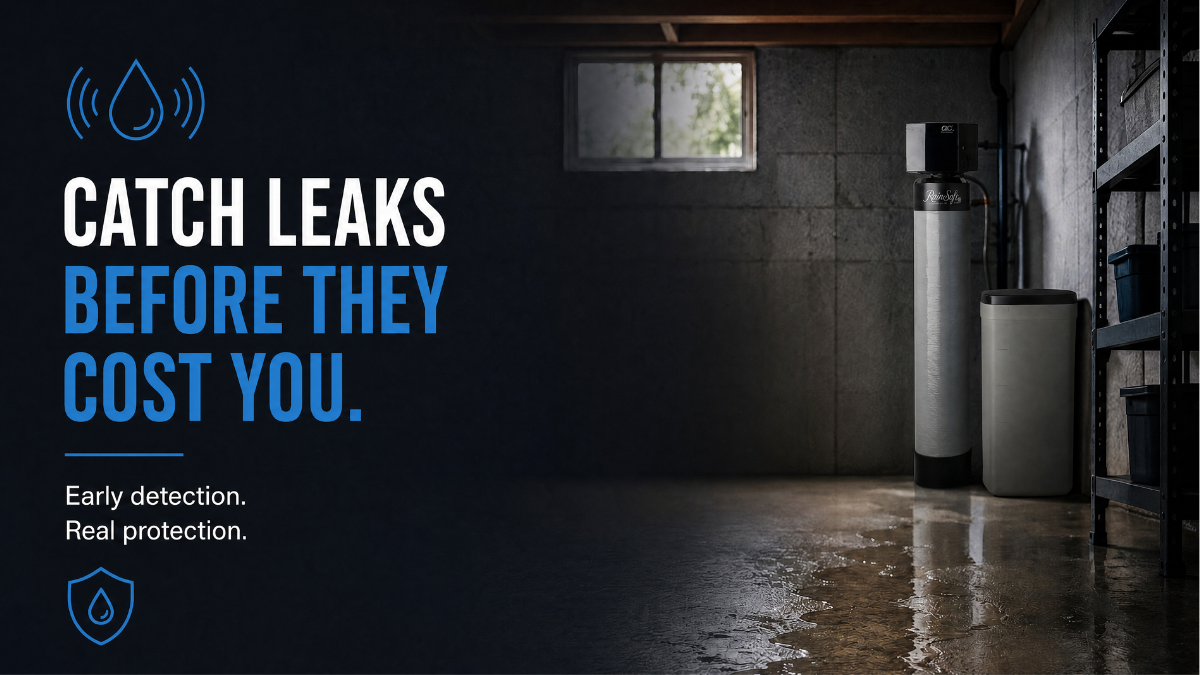
A leak detector helps you respond at the first sign of moisture, not after days or weeks of silent damage. That early warning is what makes these devices so valuable for homes with water softeners, RO systems, and other water-using equipment.
How Leak Detectors Work
The simplest leak detectors are small moisture sensors placed on the floor under a sink or beside a softener. When water touches the sensor, it sounds an alarm immediately.
More advanced smart leak detectors can send alerts to your phone and monitor unusual water flow patterns throughout the house. Some systems can even shut off the home’s water supply automatically if a leak is detected.
For homeowners in the Ozarks, the right choice depends on where the equipment is located, how often those areas are checked, and how much protection you want in place.
Where to Place a Leak Detector
The best locations for leak protection are the same places where water treatment equipment is installed and where hidden damage could be costly.
Under the kitchen sink — to catch drips from an RO system, tubing, or filter housings.
Next to the water softener — especially near the drain line and brine tank.
Near the water heater — another common source of household water damage.
At the main supply line — ideal for whole-home smart monitoring systems.
Aquasani can help homeowners in Springfield, Branson, Nixa, Ozark, and surrounding communities determine the best placement based on the home’s layout and water treatment setup.
Frequently Asked Questions
Can a water softener leak and cause serious damage?
Yes. Water softeners have several potential leak points, including the drain line, bypass valve, brine line, and system connections. A slow leak can continue unnoticed if it is in a low-traffic utility area.
What causes an RO system to leak under the sink?
Typical causes include loose fittings, worn O-rings, cracked tubing, and connections disturbed during filter replacement. Most leaks begin small, which is why under-sink leak detection is so helpful.
What is the difference between a basic leak sensor and a smart leak detector?
A basic sensor sounds a local alarm when it gets wet. A smart detector can send mobile alerts, log events, and in some systems help trigger automatic shutoff protection.
Does Aquasani offer leak protection guidance with water treatment systems?
Yes. Aquasani works with homeowners across Springfield, Nixa, Ozark, Branson, and nearby Ozarks communities to recommend water treatment solutions and practical home protection options.
Aquasani installs and services water softeners, reverse osmosis systems, and whole-home water treatment across Springfield, Nixa, Ozark, Branson, and surrounding Ozarks communities. We can also help you explore leak protection options that fit your home and equipment.
Call 417-881-4000 or visit aquasani.net to Learn More Today!